Shopify vs Magento for Dynamics 365 Integration (2026)
Shopify vs Magento for Dynamics 365 integration explained. Compare setup, cost, flexibility, and ERP sync to choose the right platform in 2026. Connecting your eCommerce store with Microsoft Dynamics 365 Business Central helps centralize your operations, reduce manual work, and improve accuracy across orders, inventory, and financial data. But the platform you choose Shopify or Magento plays a major role in how efficient that connection becomes. Both platforms support ERP integration, yet they differ in setup time, flexibility, cost, and long-term maintenance. This detailed comparison explains how each platform performs in real scenarios so you can confidently choose the right solution for your business Shopify vs Magento for Dynamics 365 integration in 2026.
What Is Dynamics 365 Integration for Shopify and Magento?
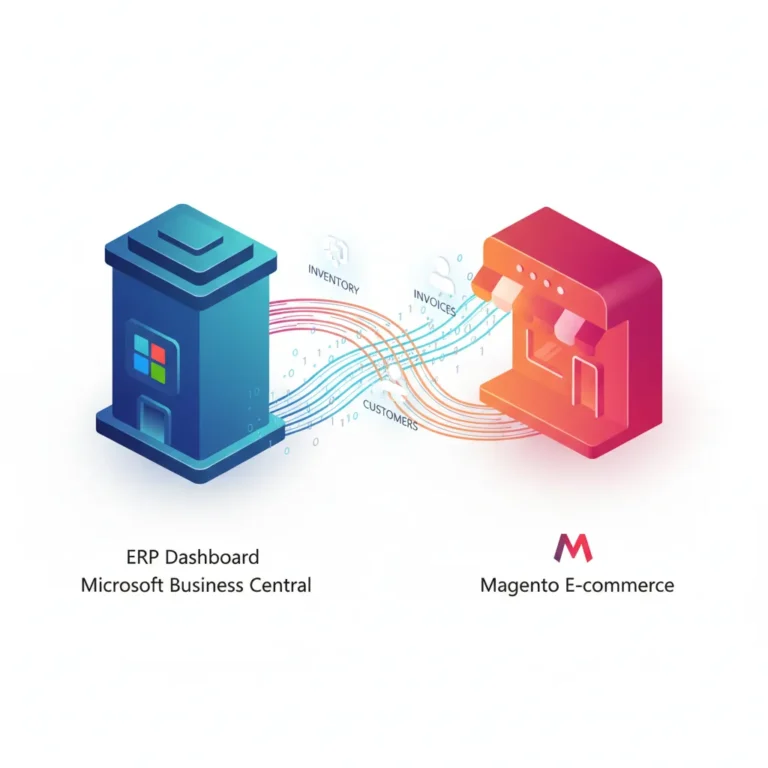
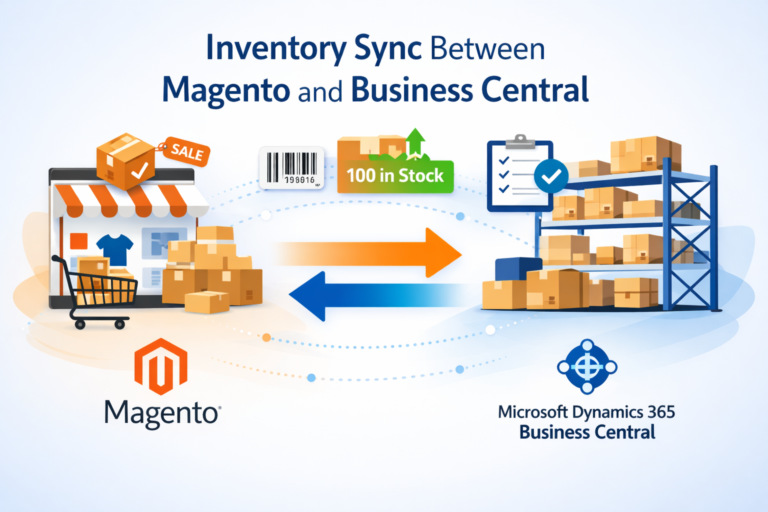
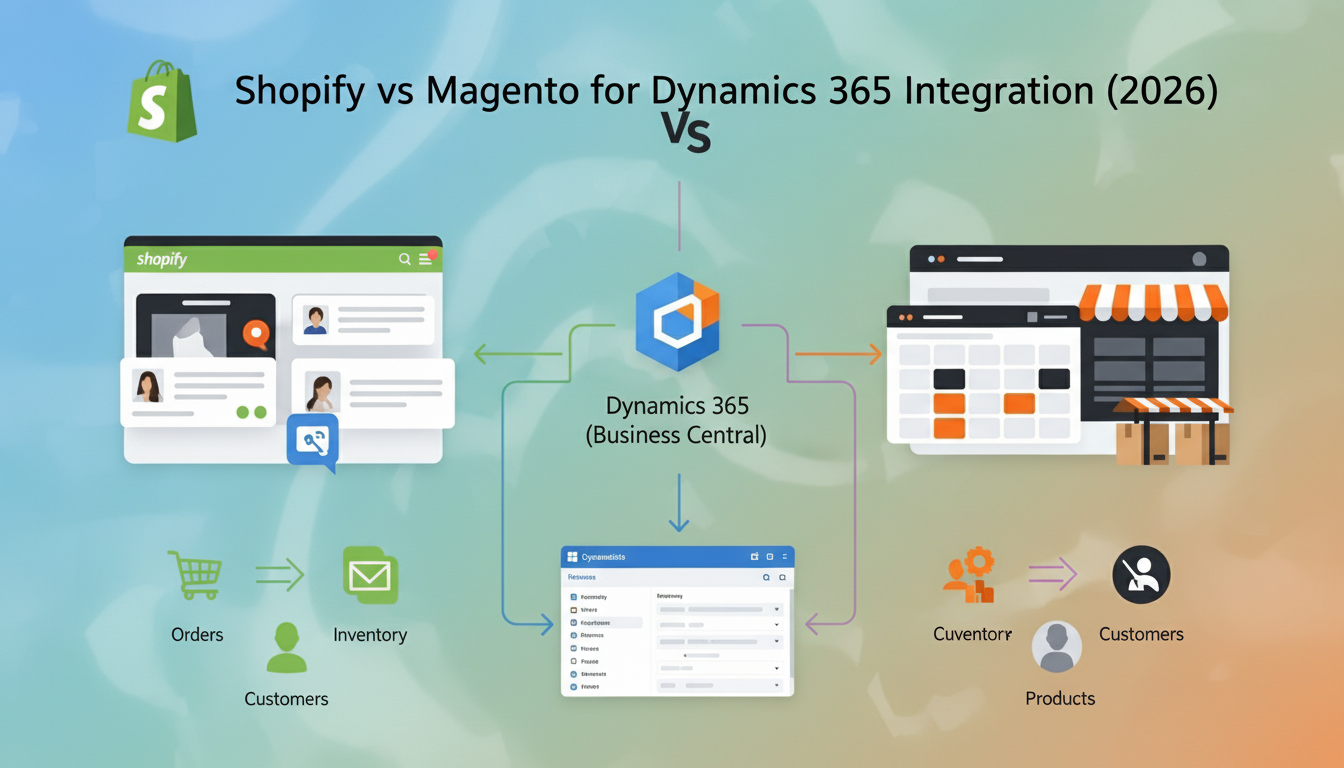
Dynamics 365 integration connects your online store with your ERP system so that business data flows automatically between them. Instead of manually updating stock, processing orders, or managing customer records, everything syncs between systems in real time or scheduled intervals.
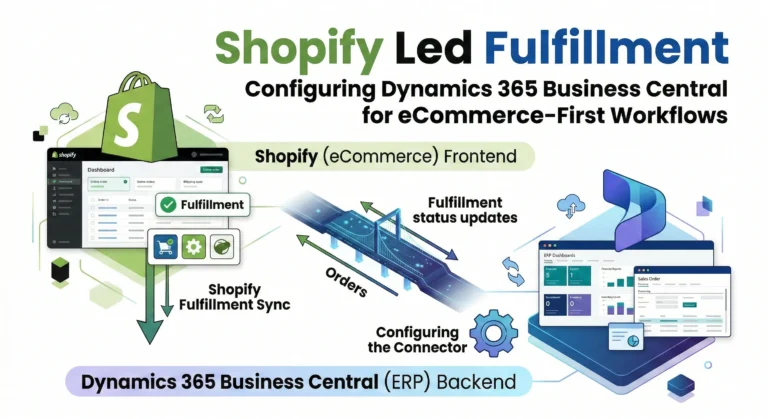
For example, when a customer places an order on your website, that order instantly appears in Dynamics 365 Business Central. Inventory levels update automatically, invoices are generated, and shipment data flows back to the store. This removes repetitive tasks and reduces the risk of human errors.
Both Shopify vs Magento for Dynamics 365 integration support this integration through APIs, connectors, or middleware. However, how smoothly this works depends on the platform’s structure, flexibility, and available tools. That’s where the real difference begins.
Shopify vs Magento: Core Integration Differences
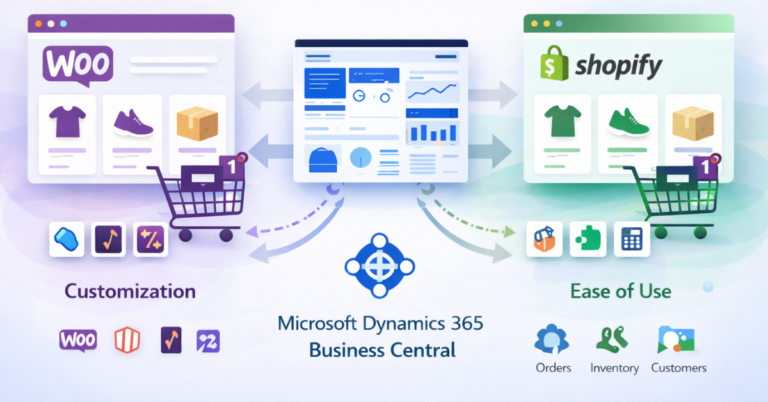
At a fundamental level, Shopify vs Magento for Dynamics 365 integration are built with different approaches. Shopify focuses on simplicity and ease of use, while Magento is designed for flexibility and deep customization. These differences become very clear when integrating with Dynamics 365.
Shopify provides a structured environment with ready-to-use apps and connectors. This makes it easier for businesses to connect their store without heavy development work. Magento, on the other hand, offers full control over code and system behavior, allowing businesses to build highly customized ERP connections.
| Feature | Shopify | Magento |
| Setup Time | 1–3 days (with connector) | 2–6 weeks |
| Technical Skill | Low | High |
| Customization | Moderate | Extensive |
| Maintenance | Minimal | Continuous |
| Cost | Predictable monthly | Higher upfront |
| Scalability | Strong | Very strong |
Ease of Integration with Dynamics 365
When it comes to integration speed and simplicity, Shopify usually has the advantage. It supports many pre-built connectors and third-party tools that allow businesses to connect with Dynamics 365 Business Central quickly. In many cases, the integration can be completed within a few days with minimal technical involvement.
Magento takes a different approach. While it provides powerful APIs, most integrations require custom development. This means businesses often need experienced developers to build, test, and maintain the connection. As a result, the setup process is longer and more resource-intensive.
To better understand the difference in real scenarios:
- Shopify integrations often go live within 1–3 days
- Magento integrations can take several weeks depending on complexity
- Shopify reduces dependency on developers
- Magento requires ongoing technical support
For businesses that want a quick and stable setup, Shopify is usually the easier path.
Customization and Flexibility
Customization is where Magento clearly stands out. It allows full access to its codebase, APIs, and database structure, which means businesses can design ERP workflows exactly according to their needs. This is especially useful for companies with complex operations, such as multi-location inventory, custom pricing models, or advanced B2B requirements.
Shopify, in comparison, offers a more controlled environment. While it supports APIs and apps, there are limitations on how much you can modify backend processes. This makes Shopify more suitable for businesses with standard workflows that don’t require heavy customization.
Here’s how both platforms compare in terms of flexibility:
- Magento supports highly customized ERP workflows
- Shopify supports standard and semi-custom workflows
- Magento is ideal for complex business logic and operations
- Shopify works best for straightforward processes
If your business requires unique operational rules, Magento provides the flexibility to handle them effectively.
Cost Comparison in 2026
Cost plays a major role when choosing between Shopify vs Magento for Dynamics 365 integration for Dynamics 365 integration. The difference is not just in pricing but also in how costs are distributed over time.
Shopify follows a subscription-based model, which means predictable monthly expenses. The initial setup cost is lower because many integrations use ready-made connectors. This makes it more accessible for small and medium-sized businesses.
Magento, however, often involves higher upfront costs. Since most integrations require custom development, businesses need to invest in development, hosting, and ongoing maintenance. While this increases cost, it also provides more control and flexibility.
| Cost Area | Shopify | Magento |
| Initial Setup | $500–$2,000 | $5,000–$25,000+ |
| Monthly Cost | Fixed subscription | Variable (hosting + support) |
| Development | Low | High |
| Maintenance | Low | Ongoing |
In most cases, Shopify is more cost-effective for businesses with limited budgets, while Magento suits companies planning long-term investment in customization.
Performance and Scalability
Both Shopify vs Magento for Dynamics 365 integration can support business growth, but they handle scalability differently. Shopify is a hosted platform, which means performance, security, and updates are managed for you. As your store grows, Shopify automatically handles increased traffic and order volume without requiring manual adjustments. This makes scaling easier for businesses without a dedicated technical team.
Magento, on the other hand, gives you full control over performance. You can choose your hosting environment, optimize servers, and configure the system based on your needs. This makes Magento highly scalable, especially for large enterprises, but it requires proper management and technical expertise.
To summarize their scalability approach:
- Shopify offers managed scaling with minimal effort
- Magento allows advanced performance control
- Magento supports complex, high-volume operations better
- Shopify ensures stability without technical overhead
Your choice depends on whether you prefer convenience or control.
Which Platform Is Better for Dynamics 365 Integration?
The better platform depends entirely on your business requirements rather than a single “winner.” Shopify integration is a strong option for businesses that want a quick setup, predictable costs, and easy management. It works well for small to mid-sized stores that need reliable ERP integration without complexity.
Magento integration is better suited for businesses that require advanced customization and have the resources to manage a more complex system. It’s particularly useful for large businesses, B2B operations, or companies with unique workflows. In short, Shopify is about simplicity and speed, while Magento is about control and flexibility. Understanding your business needs will help you make the right decision.
Need a Reliable Shopify or Magento Integration with Business Central?
Choosing the right platform is only part of the process. What really matters is how well your systems are connected and how smoothly your daily operations run after integration.
At New Wiz Tech, we help businesses integrate Shopify vs Magento for Dynamics 365 integration with Microsoft Dynamics 365 Business Central in a practical and reliable way. We focus on syncing orders, inventory, customers, and financial data accurately so your team doesn’t have to deal with manual errors or delays. Our approach is simple we under
Conclusion
When comparing Shopify and Magento for Dynamics 365 integration, the decision comes down to simplicity versus flexibility. Shopify offers a smoother and faster setup, making it ideal for businesses that want to get started quickly without heavy technical involvement. Magento, however, provides deeper control and customization, which is valuable for businesses with complex operations or long-term scaling plans.
Both platforms are capable, but they serve different needs. Before making a choice, it’s important to consider your budget, technical resources, and how complex your business processes are, so you can select a solution that truly supports your growth. Not sure which platform fits your integration needs? Get clear guidance based on your business setup and goals. Free Consultation Session
FAQs
Is Shopify or Magento better for ERP integration?
Shopify is better for simple and quick ERP setups, while Magento is better for complex and highly customized integrations.
How long does Magento integration with Dynamics 365 take?
Magento integration usually takes between 2 to 6 weeks depending on the level of customization required.
Can Shopify handle large ERP integrations?
Yes, Shopify can handle large integrations, but it may have limits with highly complex workflows compared to Magento.
Which is cheaper: Shopify or Magento integration?
Shopify is generally more affordable due to lower setup and maintenance costs, while Magento requires higher investment.
Do both platforms support real-time data sync?
Yes, both Shopify and Magento support real-time and scheduled data synchronization with Dynamics 365.
Is Magento suitable for B2B businesses?
Yes, Magento is widely used for B2B because it supports complex pricing, workflows, and custom ERP logic.